
 Image 1 of 1
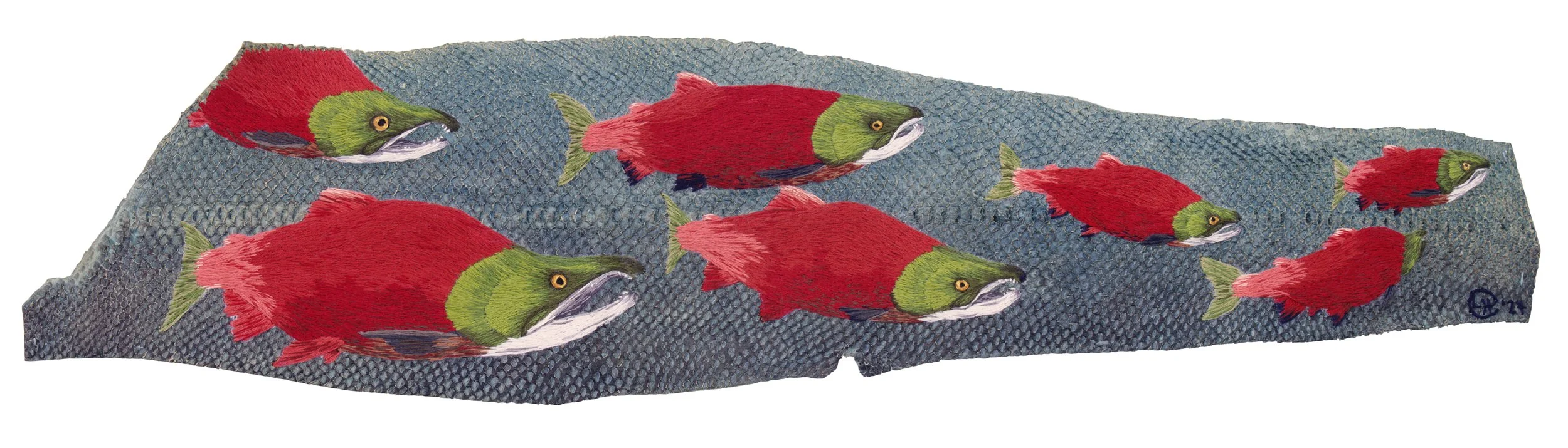
Sockeye salmon (Oncorhynchus nerka) are one of several species of anadromous (meaning they spend part of their lives in freshwater and part in salt water) salmonids living in Alaska. While one of the most common and abundant species, they are also one of the smallest averaging approximately 18-31 inches.
Adult sockeye return from the ocean after 1-3 years of growth to spawn in June/ July in Alaska. Each female deposits 2000-5000 eggs over the course of several days into "redds" she digs into gravel with her tail. Male and female salmon are semelparous, meaning they will both die within a few weeks of spawning.
Young salmon "alevins" hatch from eggs in the winter months and remain within the gravel gaining nourishment from their egg sacs. They emerge from the gravel as "fry" and will spend approximately a year in freshwater lakes if their river system contains one, otherwise they will return directly to the ocean.
While most salmon stocks in Alaska remain fairly stable, salmon on the Pacific coast of the lower 48 states are heavily depleted. Contributing factors include hydropower, resource extraction and development; and direct mortality from entrainment by hydropower projects. Snake river and Lake Ozette salmon are listed as Endangered in the United States thanks to members of the Shoshone-Bannock Tribe at Fort Hall Indian Reservation who petitioned the National Marine Fisheries Service for this inclusion.
Sockeye salmon (Oncorhynchus nerka) are one of several species of anadromous (meaning they spend part of their lives in freshwater and part in salt water) salmonids living in Alaska. While one of the most common and abundant species, they are also one of the smallest averaging approximately 18-31 inches.
Adult sockeye return from the ocean after 1-3 years of growth to spawn in June/ July in Alaska. Each female deposits 2000-5000 eggs over the course of several days into "redds" she digs into gravel with her tail. Male and female salmon are semelparous, meaning they will both die within a few weeks of spawning.
Young salmon "alevins" hatch from eggs in the winter months and remain within the gravel gaining nourishment from their egg sacs. They emerge from the gravel as "fry" and will spend approximately a year in freshwater lakes if their river system contains one, otherwise they will return directly to the ocean.
While most salmon stocks in Alaska remain fairly stable, salmon on the Pacific coast of the lower 48 states are heavily depleted. Contributing factors include hydropower, resource extraction and development; and direct mortality from entrainment by hydropower projects. Snake river and Lake Ozette salmon are listed as Endangered in the United States thanks to members of the Shoshone-Bannock Tribe at Fort Hall Indian Reservation who petitioned the National Marine Fisheries Service for this inclusion.