
 Image 1 of 1
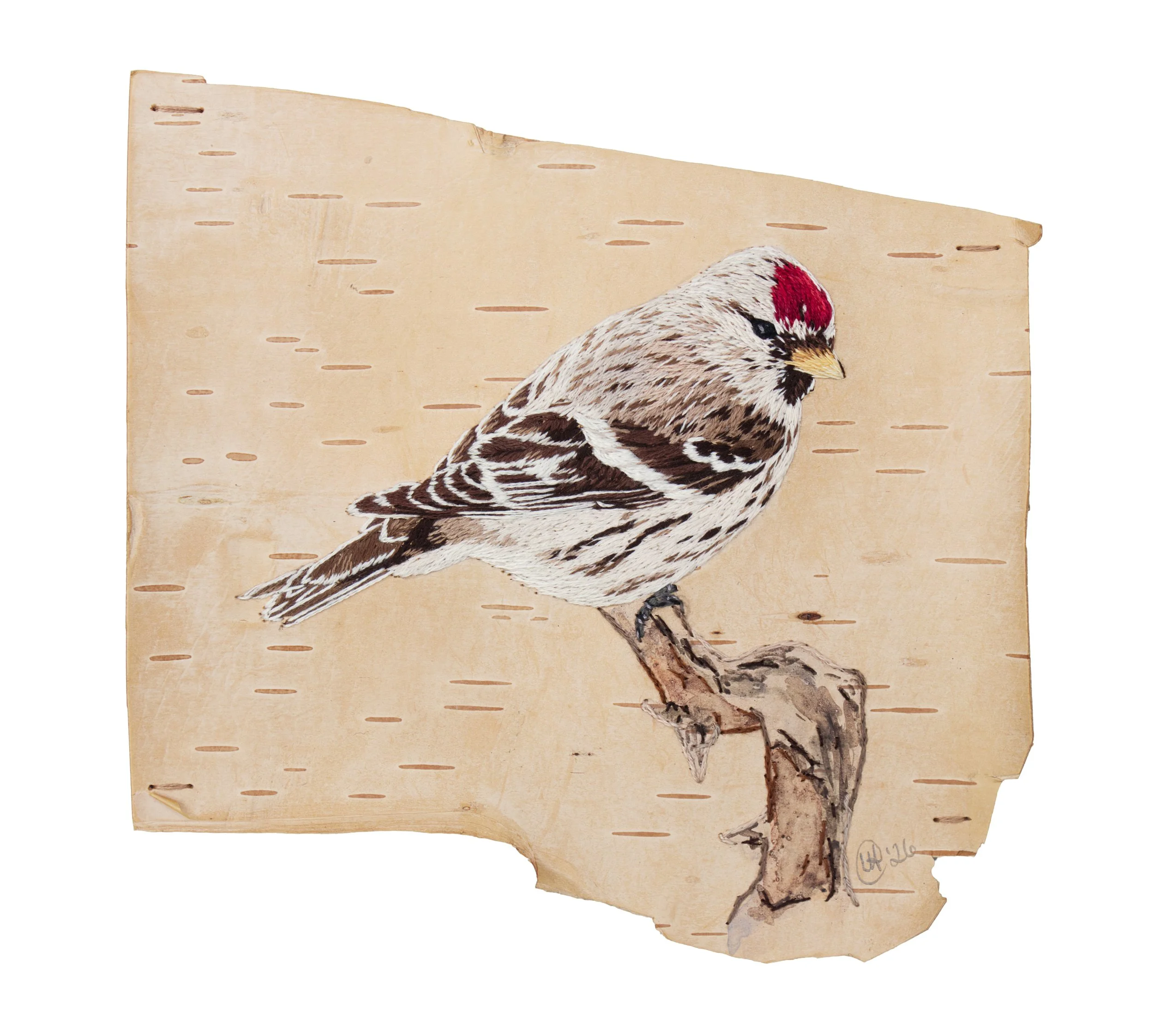
These tiny finches were, until recently, one of three separate species of redpolls found throughout the arctic tundra and boreal forests worldwide. Now, all three species have been lumped into one due to genetic analysis indicating almost no diversity between them! They are now known simply as “redpolls” or Acanthis flammea.
These charming little birds can often be seen flocking together in large groups. They feed on small seeds - commonly birch catkins and those of other trees, but also grasses, sedges and wildflowers. In summer, they often eat insects and berries as well!
Incredibly, redpolls can survive temperatures as low as -65 Fahrenheit. To stay warm, so even tunnel small burrows under the snow pack where they will roost while sleeping!
These tiny finches were, until recently, one of three separate species of redpolls found throughout the arctic tundra and boreal forests worldwide. Now, all three species have been lumped into one due to genetic analysis indicating almost no diversity between them! They are now known simply as “redpolls” or Acanthis flammea.
These charming little birds can often be seen flocking together in large groups. They feed on small seeds - commonly birch catkins and those of other trees, but also grasses, sedges and wildflowers. In summer, they often eat insects and berries as well!
Incredibly, redpolls can survive temperatures as low as -65 Fahrenheit. To stay warm, so even tunnel small burrows under the snow pack where they will roost while sleeping!