
 Image 1 of 2
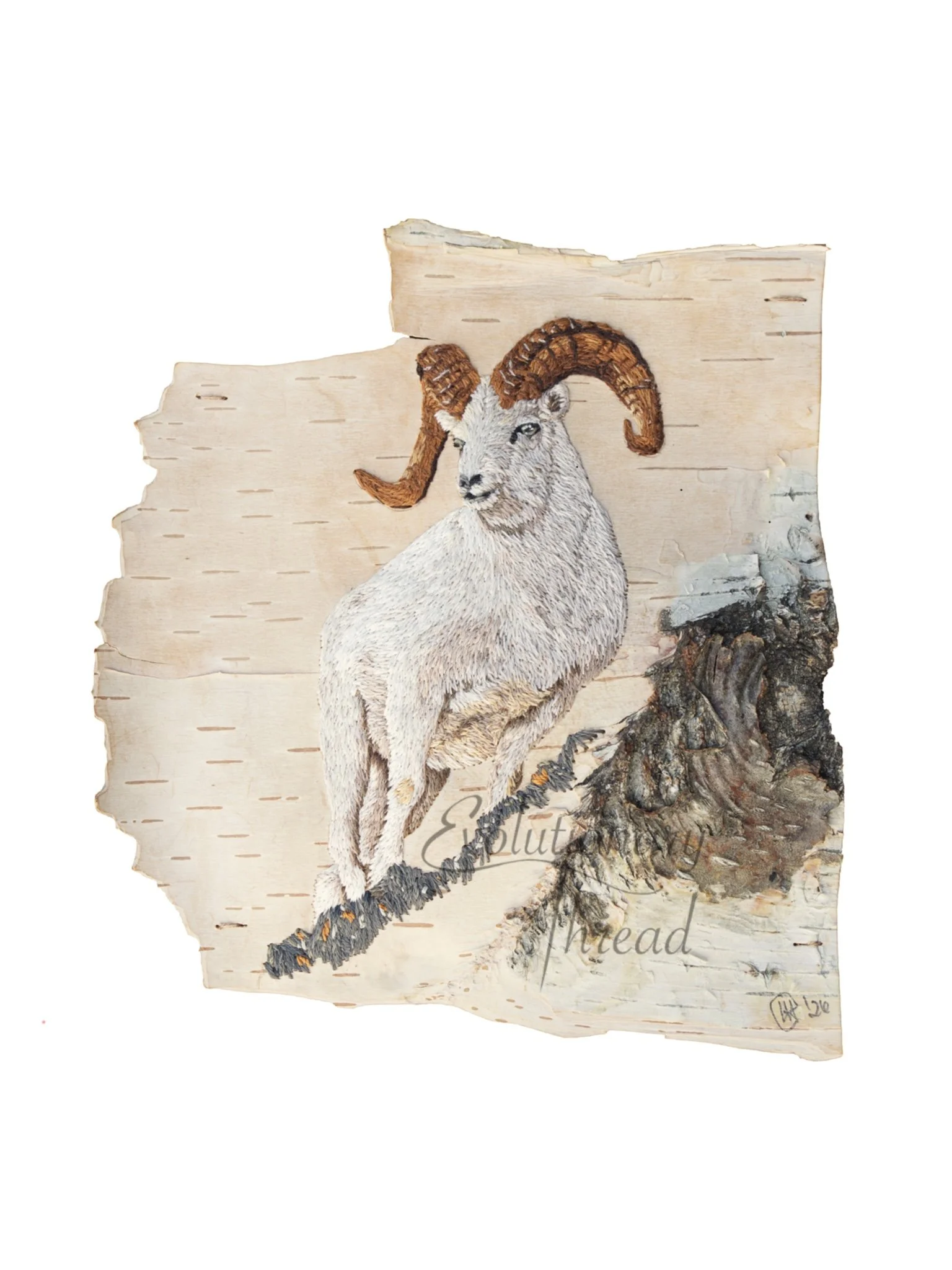 Image 2 of 2
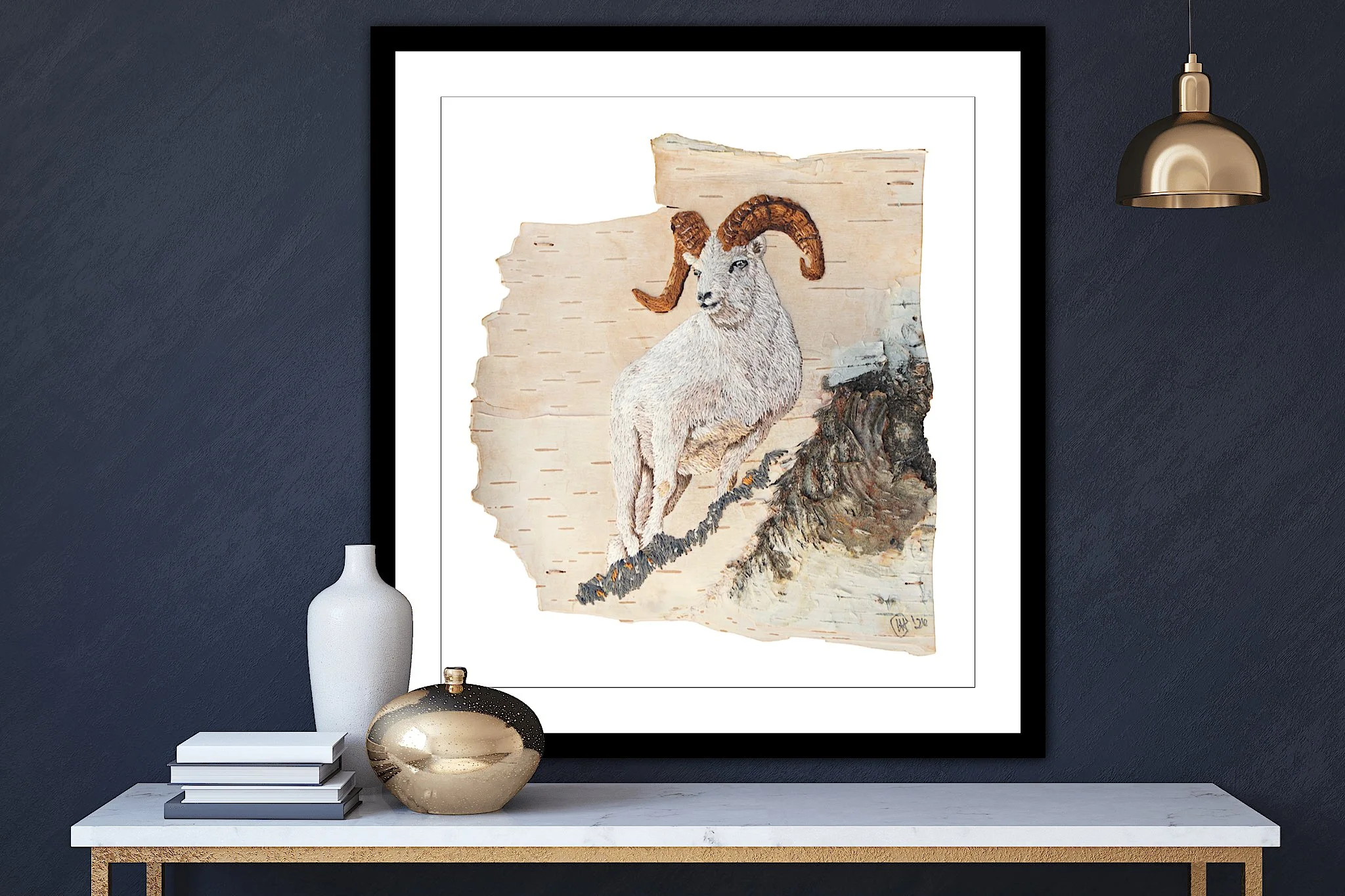
The iconic Dall sheep (Ovus dalli) can be found throughout the subarctic and arctic mountain ranges of Alaska, the Yukon Territory, western Northwest Territories, and central/northern British Columbia. They reside primarily on steep or rugged terrain where they graze on alpine tundra and grasses while staying relatively protected from predators.
Rut (mating season) occurs during autumn where rams will compete for dominance by butting horns, kicking, charging, and dominance mounting. Lambing season occurs in the spring in areas free of snow and close to foraging. The first 30-45 days of a lamb's life are particularly precarious - most fatalities occur during this time. They are often preyed upon by golden eagles, wolves, coyotes, as well as brown and black bears.
Dall sheep (ipniaq in Iñupiaq) have been an important subsistence animal for Iñupiat people throughout the northwest arctic regions of Alaska since at least the 16th century. They are prized for their skin to creat warm clothing as well as their meat, especially in times when caribou herds dwindled.
The iconic Dall sheep (Ovus dalli) can be found throughout the subarctic and arctic mountain ranges of Alaska, the Yukon Territory, western Northwest Territories, and central/northern British Columbia. They reside primarily on steep or rugged terrain where they graze on alpine tundra and grasses while staying relatively protected from predators.
Rut (mating season) occurs during autumn where rams will compete for dominance by butting horns, kicking, charging, and dominance mounting. Lambing season occurs in the spring in areas free of snow and close to foraging. The first 30-45 days of a lamb's life are particularly precarious - most fatalities occur during this time. They are often preyed upon by golden eagles, wolves, coyotes, as well as brown and black bears.
Dall sheep (ipniaq in Iñupiaq) have been an important subsistence animal for Iñupiat people throughout the northwest arctic regions of Alaska since at least the 16th century. They are prized for their skin to creat warm clothing as well as their meat, especially in times when caribou herds dwindled.